
Antiquelle
Die Quelle
Das Motiv „die Quelle“ ist ein bedeutendes Thema in der klassischen und in der aktuellen Kunst. Es ist ein vielsagendes Symbol für Ursprung, für die Reinheit des Lebens und für das Wasser als Ressource. Es steht für Reichtum, eine prosperierende Gesellschaft und in der Mythologie für die Schönheit oder auch für die gebärende Mutter und noch vieles mehr.
Ich interessiere mich für diese vielschichtigen Interpretationsmöglichkeiten der Quelle. Aus der Kunstgeschichte kennen wir das berühmte Gemälde „La Source“ von Jean-Dominique Ingres oder „La Fontaine“ von Marcel Duchamp. Diese beiden Künstler benutzten eine unterschiedliche Formensprache für das gleiche Thema. Ich möchte als Künstler beobachten, was heutzutage die Quelle für uns bedeutet. Der Sinn eines Quells hat sich in der modernen Auffassung geändert und allmählich der Gesellschaft neu angepasst. Mit der technischen Entwicklung wurde unser Leben komfortabler und behaglicher. Im Gegensatz dazu fühlt man einen Mangel in der geistig-moralischen Reife, als ob unsere sittliche Quelle durch die materielle Sattheit versiegt sei. Aber diese Seite der Zivilisationsentwicklung sehe ich als Künstler nicht einseitig und negativ, sondern als eine neue ästhetische Perspektive. Diese möchte ich hier „Antiquelle“ nennen.
Antiquelle bedeutet gegen die Quelle und schließt Phänomene der gesellschaftlichen Massenkultur und der technischen Massenmedien ein. Das führt zu einer Art Antiidentität, zu einer Dekonzentration von Eigentum, zu kollektiver Urheberschaft und zur Koexistenz von sehr ungleichen Lebewesen. Divergenz ist das Grundprinzip. Heutzutage kann man leicht im Internet sehen, dass eine ursprüngliche Form, eine Quelle durch digitale Mittel reproduziert wird und dadurch verloren geht. Es bildet sich eine allgemeine Anonymität.
Konzept - „Die Quelle“ von Dominique Ingres und „Manneken Piss“, ein Symbol der Stadt Brüssel.
Mein Projekt besteht aus vier Teilen. In jedem Abschnitt wurde von mir die Quelle als ein Motiv der Kunstgeschichte zitiert. In meinem Projekt Antiquelle geht es um eine Malerei in Pixeln. Aus optischen Gründen existieren in meinen Bildern die abstrakte und die figurative Malerei neben- und ineinander.
근원
‘근원(샘)’이라는 모티프는 고전미술에서부터 오늘날의 현대미술에 이르기까지 꾸준히 다루어져 온 중요한 주제이다. 근원은 기원을 상징하고, 생명의 순수함과 자원으로서의 물을 떠올리게 한다. 동시에 풍요와 번영을 의미하며, 신화 속에서는 아름다움이나 생명을 낳는 어머니의 이미지로도 읽힌다. 이처럼 근원은 매우 다층적인 의미를 품고 있는 상징이다.
나는 이러한 근원의 다양한 해석 가능성에 관심을 두고 있다. 미술사에는 장 오귀스트 도미니크 앵그르의 〈라 수르스(La Source)〉나 마르셀 뒤샹의 〈분수(La Fontaine)〉처럼, 동일한 주제를 전혀 다른 조형 언어로 풀어낸 작품들이 존재한다. 이 두 작업을 떠올리며, 나는 오늘날 우리에게 ‘근원’이 어떤 의미로 남아 있는지를 예술가의 시선으로 바라보고자 했다.
현대 사회에서 근원의 의미는 점차 변화해 왔고, 사회의 구조와 감각에 맞게 새롭게 재편되어 왔다. 기술의 발전은 우리의 삶을 더욱 편리하고 안락하게 만들었지만, 그와 동시에 정신적·도덕적 차원에서는 어떤 결핍이 느껴지기도 한다. 마치 물질적 풍요 속에서 우리의 윤리적 근원이 서서히 말라가는 듯한 인상을 주기도 한다. 그러나 나는 이러한 문명 발전의 모습을 단순히 부정적으로만 바라보지는 않는다. 오히려 그것을 하나의 새로운 미학적 조건으로 받아들이며, 이 지점을 ‘반근원(Antiquelle)’이라는 개념으로 명명하고자 한다.
반근원은 기존의 근원에 대한 대립적 개념으로, 사회적 대중문화와 기술 기반의 대중매체가 만들어내는 현상들을 포괄한다. 이는 고정된 정체성의 해체, 소유의 탈중심화, 집단적 저자성, 그리고 서로 매우 이질적인 존재들이 공존하는 상태로 이어진다. 이 과정에서 차이와 분산, 즉 발산이 하나의 기본 원리로 작동한다. 오늘날 우리는 인터넷을 통해 하나의 원형, 하나의 근원이 디지털 기술에 의해 무수히 복제되며 점차 그 고유성을 잃어가는 모습을 쉽게 목격한다. 그 결과, 개인은 점점 익명성 속으로 흡수된다.
콘셉트
장 오귀스트 도미니크 앵그르의 〈근원〉과 브뤼셀 도시의 상징인 〈오줌싸개 동상 (마네켄 피스)〉에서 출발한다. 나의 프로젝트는 총 네 개의 장으로 구성되어 있으며, 각 장에서는 미술사 속 ‘근원’이라는 모티프를 인용하고 변주한다. 〈반근원〉은 픽셀 회화로 이루어진 작업으로, 시각적 효과를 위해 추상회화와 구상회화가 서로 나란히 존재하거나 겹쳐지며 하나의 화면 안에서 공존하도록 구성된다.
The Source
The motif of “the source” is a significant theme in both classical and contemporary art. It is an evocative symbol of origin, of the purity of life, and of water as a vital resource. It also stands for abundance and a prosperous society, and in mythology it often represents beauty or the life-giving mother, among many other meanings.
I am interested in these layered possibilities of interpreting the source. From art history, we are familiar with the famous painting La Source by Jean-Dominique Ingres, or La Fontaine by Marcel Duchamp. These two artists employed very different visual languages to address the same theme. As an artist, I wish to observe what the source means to us today. In modern perception, the meaning of the source has changed and has gradually adapted to society. With technological development, our lives have become more comfortable and convenient. In contrast, however, there is a sense of deficiency in spiritual and moral maturity, as if our ethical source had dried up due to material saturation. Yet I do not view this aspect of civilizational development in a one-sided or purely negative way. Rather, I see it as a new aesthetic perspective, which I refer to here as the “Anti-Source.”
Anti-Source signifies an opposition to the source and encompasses phenomena of mass culture and technological mass media. This gives rise to a kind of anti-identity, to the decentralization of ownership, to collective authorship, and to the coexistence of highly unequal forms of life. Divergence is the fundamental principle. Today, it is easy to observe on the internet how an original form, a source, is reproduced through digital means and, in the process, loses its singularity. What emerges instead is a condition of general anonymity.
Concept — The Source by Jean-Dominique Ingres and Manneken Pis, a symbol of the city of Brussels.
My project consists of four parts. In each section, I cite the source as a motif from art history. In my project Anti-Source, I work with painting in pixels. For visual reasons, abstract and figurative painting coexist side by side and interwoven within the same images.
Teil 1: Antiquelle, Acrylmalerei auf Leinwand
Teil 2: Meine Quelle, interaktive Aktion
Die auf der Palette verbliebenen Farben aus der Produktion der Antiquelle werden vollständig zusammengekratzt. Diese Farben werden mit Menschen aus anderen Bereichen geteilt; der zeremonielle Prozess des Teilens wird dokumentiert oder öffentlich geteilt.
Teil 3: Während Teil 2 stattfindet, wird das Verschwinden der Quelle visualisiert, indem ausgetrocknete und aufgerissene Erde dargestellt wird.
Antiquelle II, Acrylmalerei auf Leinwand
Teil 4: Alle verbliebenen Farben werden gesammelt und zu einer dreidimensionalen Installation der Brunnenfigur verarbeitet — Manneken Pis, Installation
1부: 반근원(Antiquelle), 캔버스 위에 아크릴페인팅
2부: 나의 근원, 인터랙티브 액션 - 반근원을 제작하는 팔렛트 위에 남겨진 색들을 모조리 긁어 모아 다른영역의 사람들과 색을 나누며 세레모니 과정을 기록 또는 공유
3부: 2부가 진행하는 동안 근원이 사라지는 것을 형상화한 마르고 갈라진 땅을 그리기. 반근원 II, 캔버스위에 아크릴페인팅
4부: 남은 색들을 모조리 모아 오줌싸게 동상을 입체로 설치_마네켄 피스(Manneken Pis), 설치
Part 1: Anti-Source, acrylic painting on canvas
Part 2: My Source, interactive action
All remaining colors left on the palette from the production of Anti-Source are completely scraped off. These colors are shared with people from different fields; the ceremonial process of sharing is documented or publicly shared.
Part 3: While Part 2 is taking place, the disappearance of the source is visualized by depicting dry and cracked earth.
Anti-Source II, acrylic painting on canvas
Part 4: All remaining colors are collected and transformed into a three-dimensional installation of the fountain figure — Manneken Pis, installation
Pixelmalerei
Teil 1: Malerei auf Leinwand.
Statt einem schönen nackten Mädchen bei Ingres habe ich einen nackten Mann gemalt. In dem Gemälde hält er einen Plastikeimer auf der Schulter, aber es fällt kein Wasser heraus. Deswegen erscheint das Bild ironisch und verweist eher auf das Motiv des Mangels.
1부: 캔버스에 회화
앵그르의 작품에 등장하는 아름다운 나체의 소녀 대신, 나는 나체의 남성을 그렸다. 그는 어깨에 플라스틱 양동이를 메고 있지만, 그 안에서는 물이 흘러나오지 않는다. 이로 인해 그림은 아이러니한 인상을 주며, 풍요가 아닌 결핍의 모티프를 가리킨다.
Part 1: Painting on Canvas
Instead of the beautiful nude woman in Ingres’s work, I painted a nude man. In the painting, he carries a plastic bucket on his shoulder, yet no water flows from it. As a result, the image appears ironic and refers more to the motif of lack and absence rather than abundance.


KUNSTAKTION
Meine Quelle 2012 - 2013

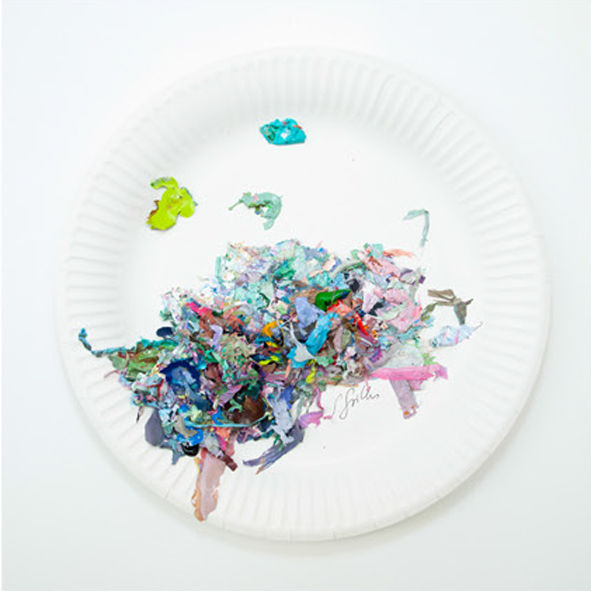
Meine Quelle, abgezogene Farbe, 180 x 80 cm, 2013
Teil 2: Interaktive Aktion.
Während der malerischen Arbeit habe ich die Farbreste von der Palette abgezogen. Sie sind in ihren Tönen identisch mit meinem Gemälde. Diese Tätigkeit Mit dem Abziehen der Acrylfarbe startete ich einen weiteren Kunstprozess. Die Farbkrümel und -Schnipsel sind für mich wie eine abgestreifte Haut und gehören weiterhin zum Ursprung des Bildes. Als nächsten Schritt habe ich diese Farbreste als ein Rohmaterial inszeniert und wie einen Pool ausgebreitet, um dann ausgewählte Leute mit verschiedenen allgemeinen Berufen daraus schöpfen zu lassen. Ich wollte ihnen diese kreative Masse wie eine Quelle anbieten, um sie mit ihnen teilen und zelebrieren zu können. Das heißt, die Quelle wird trockengelegt und anschließend anderen Menschen angeboten, damit sie ihrerseits etwas Neues daraus entwickeln können. Verschiedene Menschen sehen in Bezug auf ihren jeweiligen Kontext unterschiedliche Dinge in dem bunten Rohmaterial. Dennoch bleibt der Stoff verbindlich.
2부: 인터랙티브 액션
회화 작업을 진행하는 동안 나는 팔레트에 남아 있던 물감 찌꺼기들을 긁어 모았다. 이 색들은 내 회화 속 색조와 동일하다. 아크릴 물감을 긁어내는 이 행위를 통해 또 하나의 예술적 과정이 시작되었다. 물감의 부스러기와 조각들은 나에게 마치 벗겨진 피부와 같으며, 여전히 이미지의 근원에 속해 있다. 다음 단계로 나는 이 물감 잔여물들을 하나의 원재료로 연출하여 풀(pool)처럼 펼쳐 놓았고, 서로 다른 일반적인 직업을 가진 몇몇 사람들을 선정해 그 안에서 색을 떠가도록 했다. 나는 이 창작의 덩어리를 하나의 ‘근원’처럼 그들에게 제시함으로써, 함께 나누고 기념하며 공유하고자 했다. 이는 곧 근원이 고갈된 후, 다시 다른 이들에게 제공되어 그들 스스로 새로운 무언가를 만들어내도록 하는 행위이기도 하다. 서로 다른 사람들은 각자의 맥락 속에서 이 다채로운 원재료를 바라보며 서로 다른 것들을 발견한다. 그럼에도 불구하고, 이 물질은 여전히 모두를 연결하는 공통의 기반으로 남아 있다.
Part 2: Interactive Action
During the painting process, I scraped off the remaining paint residues from the palette. These colors are identical in tone to those in my painting. Through the act of removing the acrylic paint, I initiated a further artistic process. The crumbs and fragments of paint resemble stripped skin to me and continue to belong to the origin of the image. In the next step, I staged these paint residues as raw material, spreading them out like a pool, and invited selected people from various everyday professions to draw from it. I wanted to offer this creative mass to them like a source, in order to share and celebrate it together. In this sense, the source is drained and then offered to others, enabling them in turn to develop something new from it.
Different people perceive different things in this colorful raw material, depending on their individual contexts. Nevertheless, the material remains a shared substance that connects them all.


Kunstaktion mit TeilnehmerInnen 13.08.2013 bis 10.09.2013



Klicken Sie auf das Bild um Intervew der TeilnehmerInnen zu sehen.
Antiquelle II
Tiel 3: Malerei auf Leinwand
Während der interaktiven Kunstaktion habe ich parallel an konzeptueller Malerei gearbeitet und ausgetrocknete Erde auf eine Leinwand gemalt. Die schrumpfende Farbe lässt Leerstellen entstehen, die ich nach und nach mit Ersatzfarbe aufgefüllt habe. Wenn die Aktion fertig ist, wird der Bild der ausgetrocknete Erde auch gleich vollendet. Mein Absicht ist, dass die abgezogene Farbe in der Aktionsfrist alles geteilt werden lässt. Die Kunstaktion sei identisch wie mein Bild. Meine Quelle langsam trocknen und austrocknen. Das heißt je mehr meine Quelle in der Aktion ausgeschöpft wird, desto vollkommener wird mein Projekt sein.
반근원 II
3부: 캔버스에 회화 (한국어)
인터랙티브 액션이 진행되는 동안, 나는 동시에 개념적 회화를 작업하며 마르고 갈라진 대지를 캔버스 위에 그렸다. 수축하는 물감은 화면에 빈 공간을 만들어냈고, 나는 그 틈을 점차 대체 색으로 채워 나갔다. 액션이 종료되는 순간, 마른 대지를 그린 회화 또한 함께 완성된다.
나의 의도는 액션이 진행되는 동안 긁어낸 색들이 모두 나누어지도록 하는 데 있다. 이 세레모니는 곧 나의 회화와 동일한 구조를 가진다. 나의 근원은 서서히 말라가고 고갈된다. 즉, 세레모니 속에서 근원이 더 많이 소진될수록, 나의 프로젝트는 그만큼 더 완성에 가까워진다.
Part 3: Painting on Canvas
While the interactive action is taking place, I simultaneously work on a conceptual painting, depicting dried and cracked earth on the canvas. As the paint contracts, empty spaces emerge on the surface, which I gradually fill with substitute colors. At the moment the action comes to an end, the painting of the dried earth is completed as well. My intention is that all the colors scraped off during the action are fully shared. This ceremony mirrors the same structure as my painting. My source slowly dries up and becomes depleted. In other words, the more the source is consumed through the ceremony, the closer my project comes to completion.


Ausstellungsansicht, Antiquelle, Installation mit Dokumentationen, Künstlerforum Bonn
Manneken Pis
Teil 4: Installation
Nach der Kunstaktion habe ich die übrigen Acrylfarbreste als eine plastische Masse zu einer Skulptur geformt und ein Abbild des berühmten Manneken Piss geschaffen.
오줌싸개 동상 (마네켄 피스)
4부: 설치
예술 액션이 끝난 뒤, 나는 남아 있던 아크릴 물감 잔여물들을 하나의 조형적인 덩어리로 모아 조각으로 형상화했다. 그렇게 만들어진 조형물은 브뤼셀의 상징적인 조형물인 ‘마네켄 피스(Manneken Pis)’를 본뜬 것이다.
Manneken Pis
Part 4: Installation
After the art action was completed, I shaped the remaining acrylic paint residues into a sculptural mass and created a figure modeled after the famous Manneken Pis.


Manneken Pis, Bleistift auf Papier, 21 x 19 cm

Manneken Pis auf Treppe,
Installation, 100 x 500 x 130 cm,
Styroporplatte, abgezogene Farbe
Cristal Resin, Künstler Forum Bonn


#mannenkenpis #quelle #projekt #contemporaryart